Caring for Your Elder Cat
Gentle tips and heartfelt advice for your aging feline friend


Nutrition Tips
Feeding plans that keep your cat healthy and happy.
Health Checks
Regular monitoring to catch issues early and ease worries.
Creating cozy spaces where your cat feels safe and loved.
Disclaimer
We are not doctors and this is not medical (or veterinarian) advice. You should always consult with a vet (or more!).
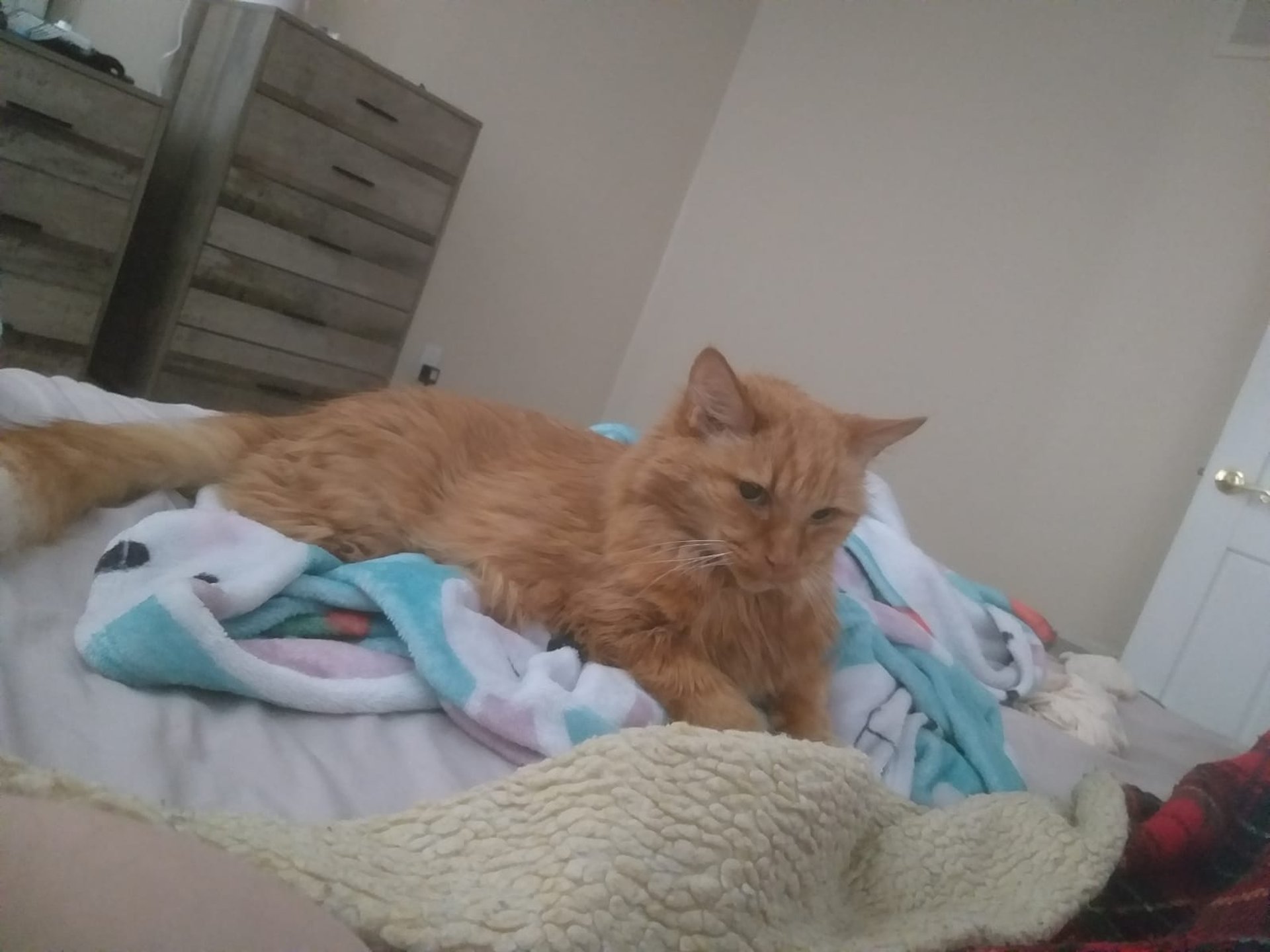
These are just our experiences and lessons we took from taking care of our little orange boy, and we share them in the hope that they will help or at least guide other kitties.
Medical Monitoring and Diagnostics
The moment your cat is diagnosed with CKD start monitoring BP, if you see signs of vision decline (your cat will sniff more to find his food or a treat from your hand rather than looking for it) take him to his vet for checking the back of the eyes and for measuring the bp, partial retinal detachment.
In home blood work and bp monitor.
Ultrasound not in the clinic but the hospital where the person taking the image is the same as the one interpreting it, tell them to do fine need aspiration or anything else if needed, if you trust them and if money is not an issue.
Early stage CKD, do a dental even if a couple of years early, since later on anesthesia can be risky with impaired kidneys.
Check the heart for murmur, do an echocardiogram if needed, subq (subcutaneous) overhydration.
Medication and Hydration
Start darbo early, darbo is better than eritro, no adverse reaction, but slower to kick in, iron supplement even if not deficient, bone marrow needs iron supplements (TODO: insert link to article comparing darbo and erithro).
Creamy catit for medication.
Get a scale for sq liquid; you want something that weighs the fluid and updates in real time, so that you know exactly how much fluid you’re giving them.
Things to avoid:
Trying to read the gradation on the fluid bags: this is horribly inaccurate, because the bag’s shape will change as it empties and depending on how you’re holding it, so your readings will be wildly inaccurate; ours were, anyway.
Time-based fluid drip, e.g., give it for 75 seconds or something similar: this is also bad, because the fluid output/throughput varies for every session, based on the height of the bag, the amount of fluid left in the bag, the density of the tissue where you inserted the needle, and how much fluid you’ve inserted to far (the tissue and skin will expand slower and slower, and the more fluid already is in that space, the slower the new fluid will trickle in). So the same amount of time will not translate in the same amount of fluid, and you will not be accurate trying to eyeball the speed of the fluid drops.
Weighing the fluid bag before and after: this is useless, because “after” means you already gave them the fluid, and you can’t take it out. You want to know exactly how much you are giving them at any point in time during the drip session.
On the same note, when they are weak, make sure they get a flu vaccine, because if you have to take them to an emergency clinic, they may pick up a bug from there. Ours probably did, despite us having given him a flu vaccine.
Keeping your cat on high quality wet/canned food helps with their hydration, mixing a little bit of extra water in their food boosts their hydration even further.
Get a scale, weight loss is bad.
varaity of food, so that they are ok with restricted diet
low sodium, low phosphores, modrate protein,
Chemical imbalance, toxin built up
three pillars: food, subq,?
General Care and Environment
Litter box:
Have a box large enough for your cat to comfortably lie in if they want.
For senior cats, the height of the box matters, go with a shallow box with easy access.
Have 2 or more identical boxes to rotate, so that when you are cleaning one, and another one can be available immediately.
Reward their peeing and pooping with their favorite treat, praising them or any positive reinforcement. They will still look for their rewards even when they feel unwell, that’s a positive thing in their life to look for.
Water and Food Bowls:
As your cat ages, they might experience arthritis in their neck. Elevating the dishes makes it easier for them to eat or drink.
Hydration and access to fresh water is very important for your cat. Using a water fountain can keep the water fresh for longer; changing the water bowl frequently helps too.
Make sure they have water bowls in every room that they spend a lot of time so that it is convenient for them to drink water from the nearest source when they need to.
Don’t change your house/furniture layout if you cat is blind. They can adapt to blindness by using other senses and creating a mental map of their surroundings.
Make sure their favorite places remain accessible, it they have difficulty climbing to bed, sofa, etc. Make sure to put pet ramps, steps and show them how to use them.
Grooming and Claws:
Check their claws regularly as they age; as arthritis and joint stiffness and energy levels decrease, they will sharpen their claws less frequently and less efficiently, and their claws can grow long enough and curved enough to pierce their foot pads.
It should go without saying that declawing your cat is simply cruel.
Use a nail clipper (preferably one for pets), never scissors; always be careful not to clip too deeply or especially cut into their skin; try to avoid clipping the tufts of fur between their foot pads.
Pet trimmer: as your cat ages, they will have a harder time grooming themselves, and also their fur quality will eventually start to decline, so they will have more clumps of tangled hair. Buy a pet trimmer, never use scissors to trim these clumps, because the risk of them making a sudden move is not worth potentially injuring them or cutting their skin.
End-of-Life Planning
Be aware that if you are given an estimate of a few weeks or months (e.g., “your pet probably has 2-4 months left to live”), you should be prepared for it to be drastically shorter.
Furthermore, because they are weak, other conditions can develop very suddenly that make things worse. For example, our kitty suddenly (over night) developed a nasal congestion that made it much more difficult for him to breathe. You may think you have weeks left with them, and then they develop something like this that makes it clear that you have, at best, days - and those days are probably going to be just suffering for your little companion.
If you get a sedative to give your cat to calm them down before euthanasia, be aware that it might severely impact their ability to eat and drink. If you want to give them their favourite treats and/or water as their last meal, you should do it before giving them this sedative.